UK: London (Cosy Science)

The Cittie of Yorke, 22 High Holborn, London WC1V 6BN
 
Last Tuesday of the month at 7pm


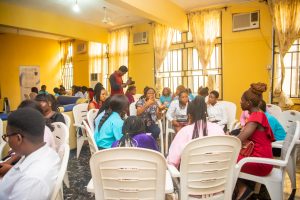
Cosy Science is a monthly informal gathering in which we discuss the hottest topics in science over a beer or a glass of wine with interested people of all backgrounds. It is a unique opportunity to meet a top scientist and share  ideas in a friendly environment.

    
Cosy Science
  This email address is being protected from spambots. You need JavaScript enabled to view it.
    
Website Cosy Science
Twitter @cosyscience
Facebook Cosy Science


The next Cosy Science Cafe will be on  Tuesday 28th of May 2013, 7pm:


Topic: What you shouldn't forget about Alzheimer's...


Speaker: Professor John Hardy


http://cosciuk.wix.com/cosciuk#!events


Our most complex organ is the brain, it is what makes us who we are. We have to pay the biggest price when something goes wrong; we might lose our memories and lose ourselves with them. John Hardy finds genes which cause neurologic diseases. The best way to look for these is to work closely with families who have high prevalence of brain disease. Once they identify the gene, they can look the position of the mistakes in the gene and reveal the mechanism which might lead to the disease and use the information to screen individuals' risk of developing it.


John Hardy is the director of the Institute of Neurobiology at UCL where he works on neurodegenerative disorders. In 1991 he found the first mutation in the amyloid gene that caused Alzheimer’s disease, whilst at Imperial College. After moving to NIH in the US, he worked on the research that found triplications in the synuclein gene, which caused Parkinson’s disease.  He returned to the Institute of Neurology (UCL) in 2007 and most recently has led the group which found the first high risk variant for Alzheimer's disease found for 20 years.   


Recent speakers   


Have a look at our Archive: http://cosciuk.wix.com/cosciuk#!archive

Sir Tim Hunt: How to win a Nobel Prize (24th of April 2012)

Tim has won numerous prizes and awards, most remarkably he received the Nobel-prize in Medicine in 2001 for his discovery of Cyclins - proteins, which control the division of cells by being produced/degraded in an oscillating fashion. This discovery was a fundamental contribution to our understanding of how the cells divide.

"But none of these pleasures, great and satisfying though they are, match the joy of discovery."


Dr Emma Byrne: The Turing Enigma (29th of May 2012)

Emma Byrne holds a PhD in Computer Science from University College London. Her research interests broadly cover the area of artificial and human intelligence. She is a widely published freelance writer, with articles and features appearing in the Financial TimeseHealth Insider and Global Business Magazine among others.She is an accomplished and enthusiastic teacher who has lead large lectures, small workshops and one-to-one sessions. She has also been involved in a wide range of public engagement activities. 


Dr Jason Rihel: I'll sleep while I live (26th of July 2012)

Jason Rihel has recently started his own research lab at University College London (UCL), where he investigates the mechanisms of sleep in zebrafish. Prior to UCL, he did both his PhD and postdoctoral research on the genetics of behaviour while at Harvard University. He fell in love with animal behaviour as a small boy growing up on a farm in the United States.


Dr Steve Fleming: The brain on trial (17th of July 2012)

Steve Fleming is a cognitive neuroscientist. He holds a Wellcome Trust postdoctoral fellowship, working at New York University and University of Oxford. This summer he is spending time at UPenn as a Fellow in neuroethics. His research combines brain imaging and computational models to study decision-making. Steve lives in Manhattan and dabbles in music and various sports, placing weight on enthusiasm over talent.


Professor David Nutt: Current controversies over drug and alcohol control (7th of August 2012)

David is a Professor of Neuropsychopharmacology at Imperial College London and a consultant psychiatrist in the Central and NorthWest London mental health trust, where he conducts research into the be mechanisms of addiction and the effects of drugs on be function. He was chair of the ACMD until sacked by Alan Johnson and now is currently the Chair of the ISCD (Independent Scientific Committee on Drugs) a charitable group that provides unbiased evidence about drugs actions and harms (www.drugscience.org.uk).


Simon Watt- Sexy Science (25th of September 2012)

Simon is an evolutionary biologist who thus far has had a very unusual career path.Though he has spent the vast majority of his working life as an educator in one form or another he has somehow bypassed becoming a teacher. Instead, he has favoured jobs which allow him to dress up funny and flit through the centuries with reckless abandon. His true love however lies in science. Particularly the weird stuff. Particularly the weird stuff that we think is normal. 

He is perhaps best known for his work as a presenter on Channel 4′s BAFTA winning series  ”Inside Nature’s Giants” and the 90 minute special “The Elephant- Life After Death”.  As a writer, his work has been published in The Times, The Sunday Times, and many other national newspapers and magazines.  His science based plays, lectures, demos and stand -up routines have become a regular feature of science festivals and other live events around the country. 


Professor Gaudenz Danuser- The symphony of cancer (17t of October 2012)

Gaudenz Danuser is currently Professor of Cell Biology at Harvard Medical School. His lab combines molecular cell biology, live cell imaging, and mathematical modeling to study how (cancer) cells migrate. He was trained as a musician and electrical engineer. Before moving to Harvard he held faculty appointments at ETH Zurich (his alma mater) and at the Scripps Research Institute in California.

This talk was sponsored by the Company of Biologists 


Professor Steve Miller- Chemical Cosmos (30th of October 2012)

Steve Miller is Professor of Science Communication and Planetary Science at University College London. He advises the UK and European Space Agencies on their science and exploration programmes. Steve’s research interests include exploring the way in which astronomy is communicated in culturally diverse communities, such as the island of Hawaii, and understanding the atmospheres of giant planets like our own Jupiter and Saturn, and some of the extrasolar planets that have been found orbiting stars “close” to our Sun. At UCL and in the wider European community Steve teaches scientists young and old how to engage and communicate with their fellow citizens. He is  the author of The Chemical Cosmos: a guided tour, published by Springer. 


Dr Chris Cocking- Don't Panic (2th of November 2012)

Chris Cocking‘s interests are in the psychology of crowd behaviour (particularly during mass emergencies), collective resilience and post disaster psycho-social support. He has also worked in the crowd management sector, consulting on crowd behaviour at large events in the South East. He also advises on emergency planning, and is a visiting speaker at the Cabinet Office Emergency Planning College. Other one-off consultations he has provided have been for the London Resilience Team (part of the Government Office for London), and the Greater London Assembly (where he contributed to their report into the 7/7 terrorist bombings). Along with colleagues, he has had his research findings published in various peer-reviewed academic and applied journals. He is also a qualified Psychiatric Nurse with experience of working in Child and Adolescent Mental Health. 


Professor John Pickett- Food Crisis (18th of December 2012) 

Professor John Pickett is a world-renowned organic chemist who specialised in the so-called semiochemicals. These compounds affect the behaviour of specific insects and serve as an alternative solution to wide-spectrum pesticides. Recent practical successes include a programme for controlling stem borer pests and striga weeds in Africa, where thousands of subsistence farmers have already adopted systems for exploiting the natural product chemicals of certain companion crops.  John now holds the first Michael Elliott Distinguished Research Fellowship at Rothamsted.  As well as fulfilling this prestigious new role, he continues to lead research into the field of chemical ecology.


Dr Nessa Carey: Epigenetics- Nature vs Nurture (29th of January 2013)

Nessa Carey has a virology PhD from the University of Edinburgh and is a former Senior Lecturer in Molecular Biology at Imperial College, London. She has worked in the biotech and pharmaceutical industry for ten years. She lives in Bedfordshire and has recently published her first book: The Epigenetics Revolution


Dr Dean Willis: What grandma told me about inflammation (26th of February 2013)

After completing his PhD at the William Harvey Research Institute in London Dean undertook a research fellowship in Rheumatic Diseases at the same institute. He is currently a principal investigator at UCL. The focus of his lab’s research is cell signalling mechanisms in inflammatory diseases and the identification of therapeutic targets. He also has an interest in the mathematical modelling of disease and the drug discovery process.


Professor David Pellman: Jerky or smooth: The evolution of cancer (13th of March 2013)

Professor David Pellman is currently the Margaret M. Dyson Professor of Pediatric Oncology at the Dana-Farber Cancer Institute, Professor of Cell Biology at Harvard Medical School and an Investigator at the Howard Hughes Medical Institute. His lab studies the mechanisms underlying normal cell division and the cell division defects in cancer cells that cause genetic instability. David completed his medical training at the University of Chicago before moving to Boston for his clinical fellowship training at the Dana-Farber Cancer Institute. After a postdoctoral fellowship at the Whitehead Institute, MIT, he was appointed as an assistant professor at Dana-Farber Cancer Institute in 1995.

This talk was sponsored by the Company of Biologists


Dr Chiara Ambrosio: Art for science's sake? (26th of March 2013)

Chiara Ambrosio is a Lecturer in History and Philosophy of Science at the Department of Science and Technology Studies, University College London. Her research focuses on the relations between art and science, as well as general topics in history and philosophy of science. She works in close collaboration with artists, scientists, museums and galleries across London to ensure that her (occasionally quite abstract) philosophical ideas find a concrete counterpart in real life and practice. 


Professor Jack Price: Repairing the brain with stem cells (30th of April 2013)

Jack Price is Professor of Developmental Neurobiology at the Institute of Psychiatry, King's College London, and is Head of the Institute's Centre for the Cellular Basis of Behaviour.  He is also a consultant for ReNeuron Ltd., a UK biotech company, developing stem cells for therapeutic and drug discovery applications.  Jack Price has worked on neural stem cells in various guises for about twenty-five years, and has more recently being pursuing an interest in modelling neurodevelopmental disorders using stem cells.